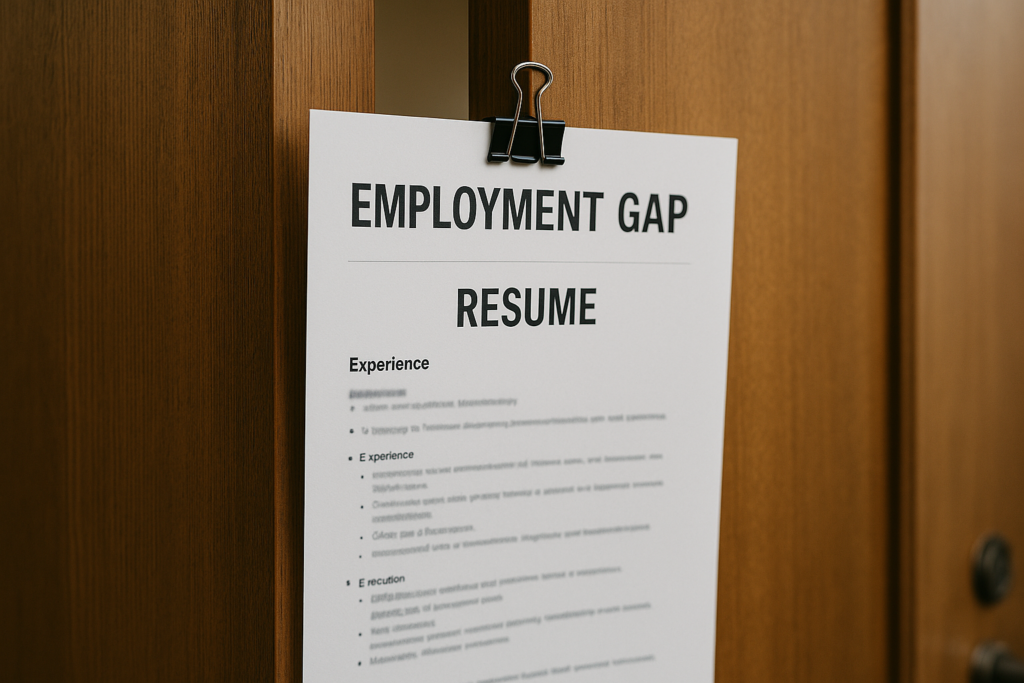
Employment gaps are common, and they do not automatically disqualify you from consideration. People step away from work for many legitimate reasons, including layoffs, caregiving, health issues, education, military service, relocation, parenting, travel, and career transitions. What matters most is how you present the gap, what you did during that time, and how clearly you reconnect your experience to the job you want now.
If you are wondering how to explain employment gaps without hurting your candidacy, the goal is simple: be honest, be brief, and move the conversation back to your qualifications. A strong employment gap resume strategy does not try to hide the truth. Instead, it frames your background in a way that is accurate, professional, and relevant to employers in the United States job market.
In this guide, you will learn how to handle a resume gap explanation on paper and in interviews, what employers are really looking for, and how to talk about gaps in employment with more confidence.
Why employment gaps matter less than many job seekers think
Many candidates assume any break in employment will be viewed as a major red flag. In reality, hiring managers usually care more about three things:
- Whether you can do the job
- Whether your recent background makes sense
- Whether you explain your timeline clearly and professionally
A gap becomes more of a problem when it is confusing, inconsistent, or paired with weak positioning. If your dates are unclear, your resume looks evasive, or your interview answer sounds defensive, employers may focus on the gap more than necessary. On the other hand, if your explanation is straightforward and your value is well presented, the gap often becomes a minor point.
That is why the best approach is not overexplaining. It is strategic clarity.
Common reasons for employment gaps
Before you work on wording, identify the real reason for your gap and the most professional way to describe it. Common examples include:
- Corporate layoffs or downsizing
- Family caregiving responsibilities
- Personal or family health matters
- Full-time parenting
- Continuing education, certifications, or training
- Freelance, consulting, or contract work
- Relocation or immigration-related transitions
- Military service or spouse relocation
- Taking time to reassess career direction
You do not need to share every personal detail. You only need enough information to explain the timeline honestly and keep the focus on your readiness to return or move forward.
How to explain employment gaps on a resume
Your resume should present the gap calmly, not apologize for it. In most cases, the best strategy is to acknowledge the time period in a concise way and emphasize any productive, relevant activity that took place during that period.
1. Use years if that format is appropriate
One common employment gap resume technique is using years instead of months and years, especially if the gap is relatively short and your chronology is still accurate. For example, listing positions as 2021–2023 rather than March 2021–January 2023 can reduce attention on a short break without being deceptive.
However, this approach should be used carefully. If an application requires exact dates, provide them accurately. Consistency across your resume, LinkedIn profile, and applications matters.
2. Include relevant activities during the gap
If you completed freelance work, coursework, volunteer leadership, consulting projects, family business support, or professional development, consider including it. This can help bridge the timeline and show continued engagement.

Examples:
- Independent Consultant | 2023–2024
- Professional Development and Certification | 2022–2023
- Family Caregiver | 2021–2022
- Career Transition and Skills Development | 2023–2024
You can keep these entries brief, but they should still sound professional and truthful.
3. Focus on skills, results, and readiness
If you had a gap but remained active, explain what you did in a way that connects to the target role. For example:
- Completed coursework in project management and Excel reporting
- Managed scheduling, budgeting, and logistics for a family member’s care
- Handled client assignments on a freelance basis
- Volunteered in a leadership role requiring coordination and communication
This is especially helpful when your resume gap explanation could otherwise look like a blank period.
4. Do not try to disguise the gap with misleading job titles
Avoid inventing employment, stretching dates, or turning occasional side projects into full-time roles if they were not. Employers may verify dates or ask detailed follow-up questions. A truthful explanation is always stronger than a fragile one.
5. Consider a hybrid resume format if needed
If your career history includes multiple gaps, a hybrid format can help. This structure leads with a strong summary and core skills section before listing work history. It still includes dates, but it places more emphasis on qualifications, accomplishments, and fit for the role.
That said, do not assume a functional-style resume will solve everything. Many employers still want a clear career timeline. A hybrid format works best when it improves readability without hiding chronology.
A simple comparison of resume gap strategies
| Approach | Best Use | Key Advantage | Watch Out For |
|---|---|---|---|
| Use year-only dates | Short or moderate gaps | Reduces visual emphasis on exact timing | Must remain accurate and consistent with applications |
| Add a gap entry | Caregiving, education, consulting, transition periods | Explains the timeline directly | Should be brief and professional, not overly personal |
| Highlight freelance or volunteer work | When you stayed active during the gap | Shows continued skill use and initiative | Do not overstate scope or title |
| Use a hybrid resume format | When strengths deserve emphasis before chronology | Moves focus to skills and results | Still needs a clear work history section |
How to talk about gaps in employment in interviews
Interviewers often ask about employment gaps simply to understand your timeline. In most cases, they are not looking for a dramatic story. They are looking for a clear answer, professionalism, and evidence that you are ready for the role.
When deciding how to talk about gaps in employment, use this formula:
- State the reason briefly
- Mention anything constructive you did during the time
- End by connecting back to your interest and readiness for the job
That structure keeps your answer focused and forward-looking.
Example structure
“After my position was eliminated, I took time to evaluate my next step and completed additional training in data reporting. During that period, I also supported a few contract projects. I am now focused on returning to a full-time role where I can bring my operations experience and problem-solving skills.”
This works because it is direct, calm, and relevant.
Resume gap explanation examples for different situations
The best wording depends on the reason for the gap. Here are practical examples you can adapt.
Layoff or position elimination
On the resume:
Career Transition | 2024
Completed targeted job search, industry research, and professional development in supply chain systems.
In the interview:
“My previous role ended as part of a company restructuring. Since then, I have stayed active by sharpening my skills and targeting roles that match my background in logistics and process improvement.”
Caregiving
On the resume:
Family Caregiving Sabbatical | 2022–2023
Managed full-time family responsibilities while maintaining professional knowledge and preparing for return to work.
In the interview:
“I took time away from full-time employment to manage an important family caregiving responsibility. That situation is now stable, and I am fully prepared to return to work and commit to this next role.”
Health-related break
On the resume:
Personal Leave | 2023
Planned leave from the workforce; ready for full-time professional reentry.
In the interview:
“I took a temporary leave for a personal health matter that has been resolved. I am ready to return to work and excited to focus on roles where I can contribute my customer service and team leadership experience.”
You do not need to disclose medical details. Keep it professional and concise.
Education or retraining
On the resume:
Professional Development | 2023–2024
Completed coursework in digital marketing, analytics, and content strategy.
In the interview:
“I used that period to build skills that support my transition into this field, including training in analytics and campaign reporting. I am now looking for a role where I can apply both my prior experience and these newer skills.”
Parenting or time at home
On the resume:
Full-Time Parenting Sabbatical | 2021–2024
In the interview:
“I chose to step away from full-time work for a period to focus on my family. I am now ready to return, and I have been intentional about keeping my skills current and targeting roles that match my background.”
Career change or reassessment
On the resume:
Career Transition and Skills Development | 2023–2024
Researched target industries, completed training, and refined focus toward project coordination opportunities.
In the interview:
“I took time to reassess my direction and make a purposeful shift into work that better aligns with my strengths. During that time, I built relevant skills and clarified the kind of role where I can contribute most effectively.”
What employers want to hear
When you explain a gap, hiring managers generally want reassurance on a few points:
- The gap has a reasonable explanation
- You are being honest
- You remained responsible and productive
- You are ready and available for the role now
- Your skills still match the job
If your answer covers those points, you are usually in good shape. You do not need a perfect career timeline. You need a credible, confident one.

Mistakes to avoid when explaining employment gaps
Being defensive
If you sound embarrassed or irritated, the issue can seem bigger than it is. A neutral, professional tone works best.
Talking too long
Long explanations can raise more concerns than short ones. Answer the question, then pivot back to your qualifications.
Sharing too much personal information
Especially with health, family, or financial issues, it is fine to maintain privacy. Keep your explanation truthful but appropriately limited.
Blaming former employers
If the gap followed a layoff, restructuring, or difficult exit, avoid bitterness. Employers notice professionalism.
Ignoring the gap entirely
If the timeline obviously shows a missing period, address it. Silence can create uncertainty.
Using inconsistent dates
Your resume, LinkedIn profile, and applications should align. Small inconsistencies can create unnecessary doubt.
How to rebuild confidence after a long gap
Some job seekers worry less about how to explain employment gaps and more about whether they still look marketable after time away. That concern is understandable, but a gap does not erase your experience. The key is to show current relevance.
To strengthen your position:
- Update your resume for the specific roles you want
- Refresh your LinkedIn profile and headline
- Take a short course if your field has changed
- Practice interview answers out loud
- Reconnect with former colleagues, managers, and industry contacts
- Collect examples of recent projects, volunteer work, consulting, or learning
Even if you have been out of the workforce for a while, these steps can help you present a more current and confident candidacy.
How to make the rest of your resume stronger
A strong resume can reduce the impact of an employment gap by making your value clearer overall. Focus on these areas:
Use a strong summary
Your opening summary should quickly show who you are, what you do well, and what type of role you are targeting.
Emphasize accomplishments, not just duties
Results help shift attention away from timeline concerns. Numbers, scope, and achievements make your case stronger.
Tailor your resume to each role
Align your language with the employer’s needs. A generic resume leaves more room for a gap to become the focus.
Show current tools and skills
If you have had time away, current technology, platforms, and methods matter even more. Demonstrate that you are up to date where relevant.
How to explain employment gaps with confidence
Confidence usually comes from preparation, not personality. If you know what you plan to say, you are less likely to ramble or panic.
Write out your answer in two or three sentences. Then practice until it sounds natural. Your goal is not to memorize a script word for word. Your goal is to become comfortable saying the truth in a concise, professional way.
A good answer often sounds like this:
“I stepped away from full-time work for a period to handle a family responsibility and also used that time to stay organized and keep up with my field. That situation is resolved, and I am now focused on returning to a role where I can contribute my experience in operations and customer support.”
Notice what this does well:
- It answers the question
- It does not overshare
- It signals readiness
- It redirects attention to relevant strengths
Final thoughts
Employment gaps are a normal part of many careers. They can be explained effectively without apology, drama, or complicated storytelling. Whether you are preparing an employment gap resume, refining a resume gap explanation, or practicing how to talk about gaps in employment in an interview, the same principles apply: be honest, be brief, and stay focused on the value you bring now.
A well-positioned gap explanation will not matter nearly as much as a targeted resume, a clear professional story, and a strong connection between your background and the role you want next. If you handle the issue directly and professionally, you can keep the conversation where it belongs: on your qualifications, readiness, and fit.